Walking the Downs: Rhythm, Mark, Memory
When walking and photographing in the landscape, I mean really feeling it and truly looking, rather than perhaps simply documenting it, I begin to see it as a surface to be felt and remembered.
My attention moves towards shape and form, and the sense that these forms are layered with unseen histories.
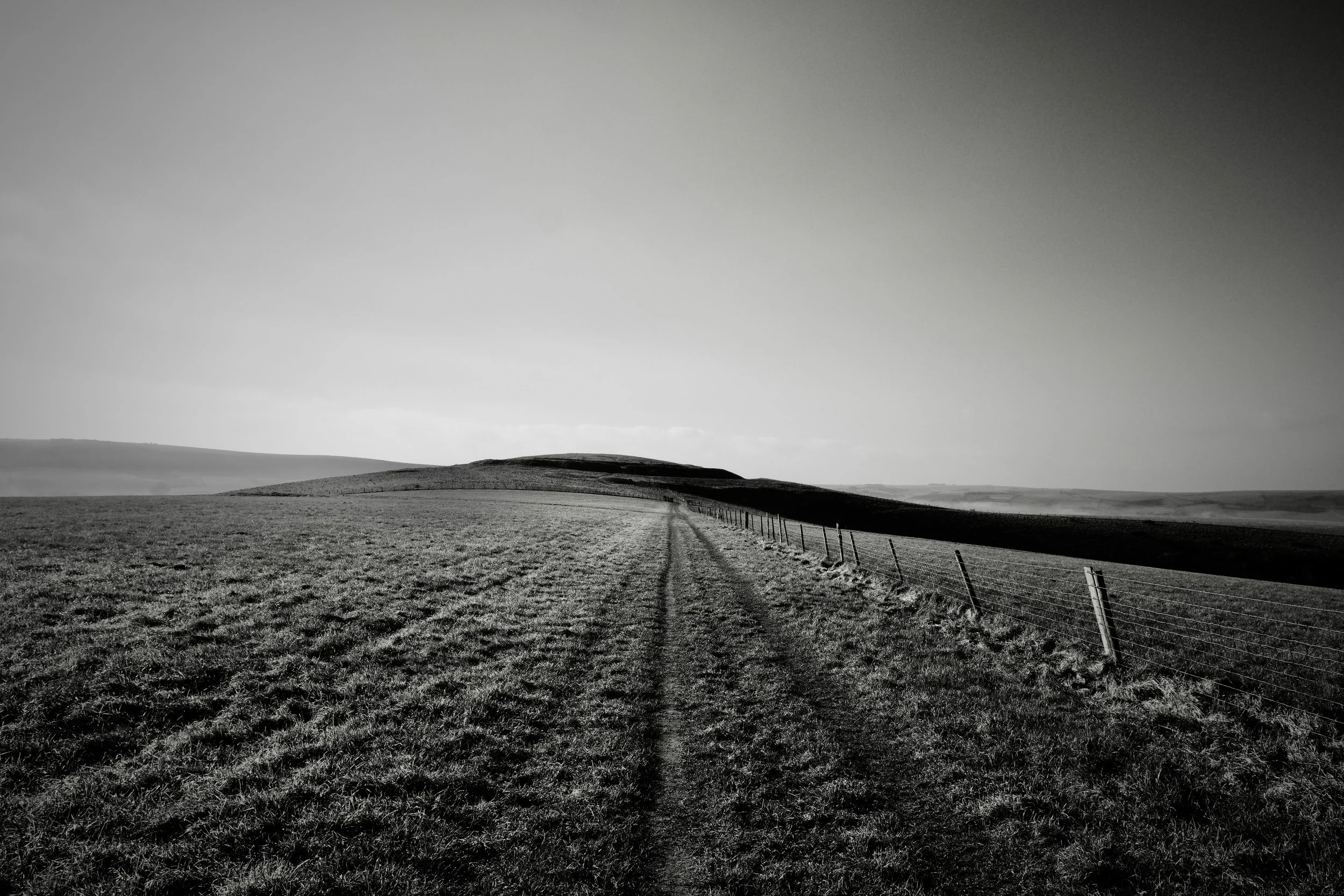
Photographing the land informs my studio painting practice. It allows me to focus on the contours, paths, lynchets, curves and lines.
Lynchets are those terraced banks or steps that form on slopes over long periods of time, through repeated ploughing or soil gradually moving downhill. They usually appear as horizontal ridges across hillsides and are especially common in ancient or long-farmed landscapes, such as the South Downs.
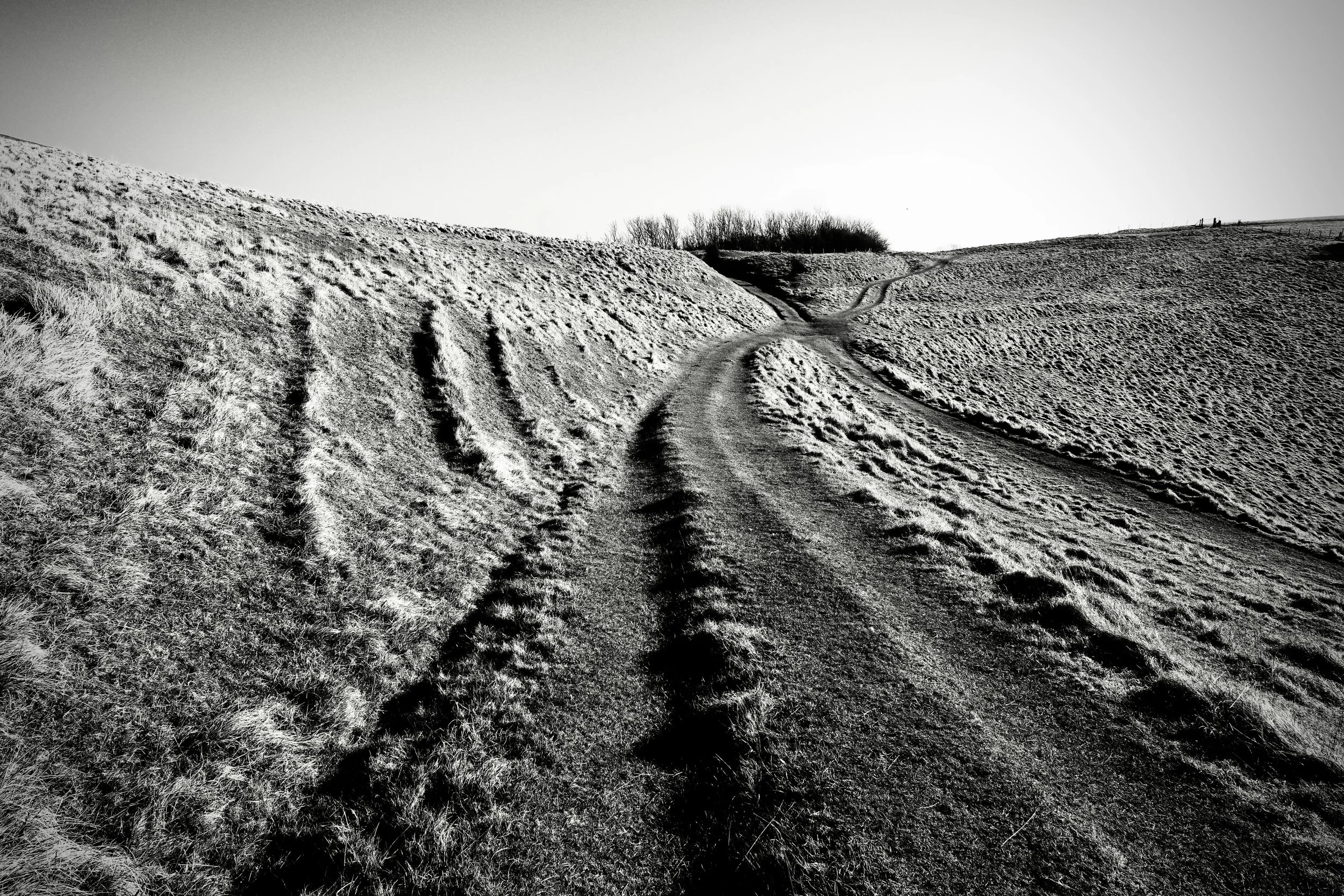
My work is informed by repeated walks in the South Downs. I am drawn to the contours and the structures of the land, and to the paths worn into the ground.
I am not seeking factual history; I am looking for an abstract sense of time and presence. The exact details matter less than the feeling they hold.
Working in black and white enables the shapes in the landscape to reveal themselves more clearly. In the absence of colour, the rhythms of line and shadow, the contrast between light and dark, and the underlying geometries of the land stand out. In this way, the landscape begins to resemble a kind of notation, where shape and spacing suggest rhythm and pace.
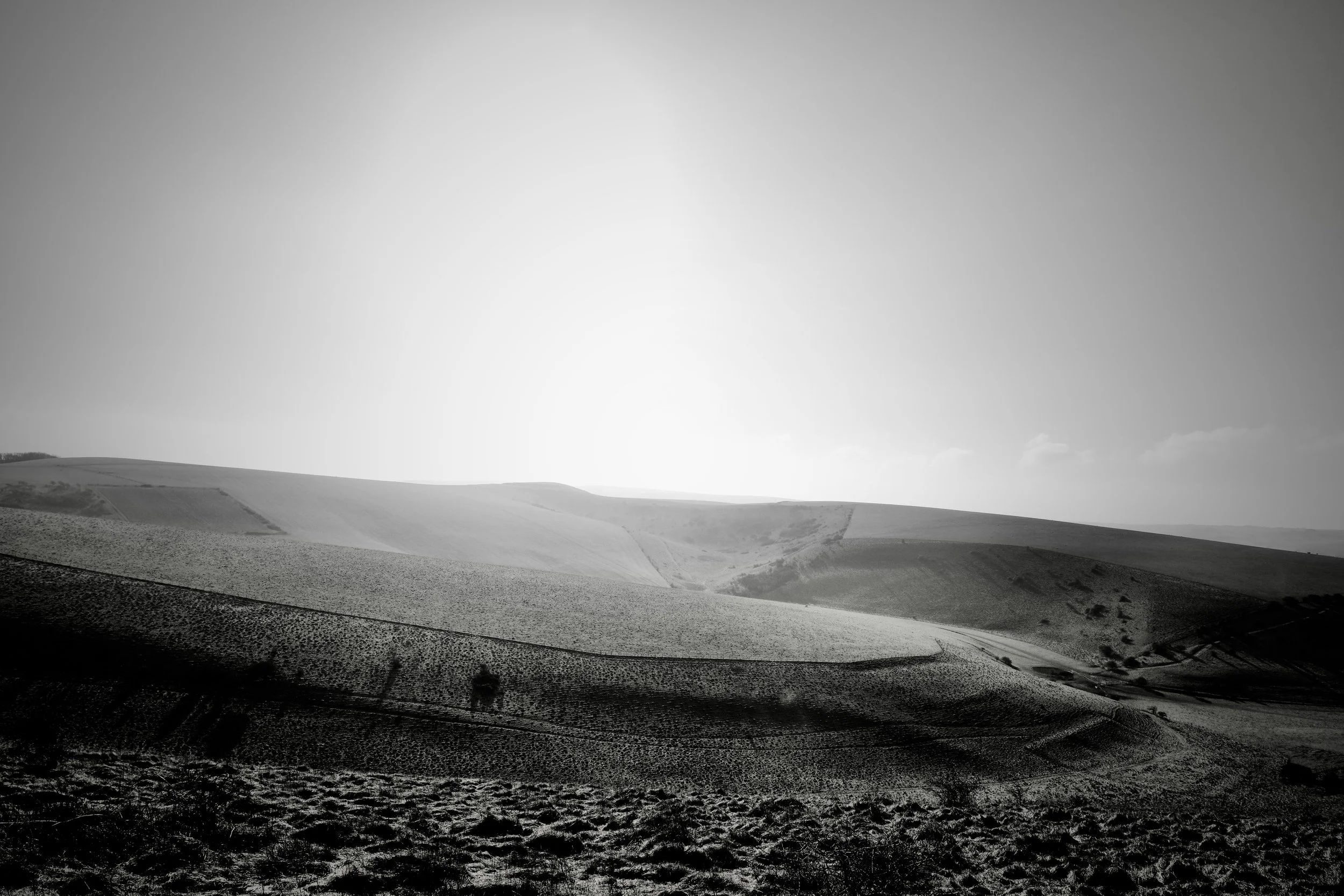
It is the curves, ridge lines and subtle changes in elevation that form a visual language for me. It is a language that speaks of movement, memory and time.
Seeing in monochrome makes this language clearer, and allows form, contrast and mark to come to the surface. These are then translated into the marks in my paintings, usually through a kind of subconscious transfer rather than conscious planning.
In the studio, I work in layers, building and eroding the surface so earlier marks remain visible. The work usually becomes a palimpsest, holding traces of what came before.
A palimpsest is a surface that has been written on, erased, and then written on again and again, so that earlier traces still remain beneath the new marks. This is what has happened in the surface of the ancient landscape and traces of story are subtly suggested and reveal themselves.
In my work, palimpsest refers to the way layers of paint and memory build up over time, allowing earlier gestures and histories to remain visible within the surface.
The surface is not meant to be read as literal language, but at the same time, it is not purely abstract either. It works in an asemic way. Asemic writing is a form of mark-making that resembles writing but carries no specific words or semantic meaning. For me, these asemic elements represent emotion: a form of music in their own right.
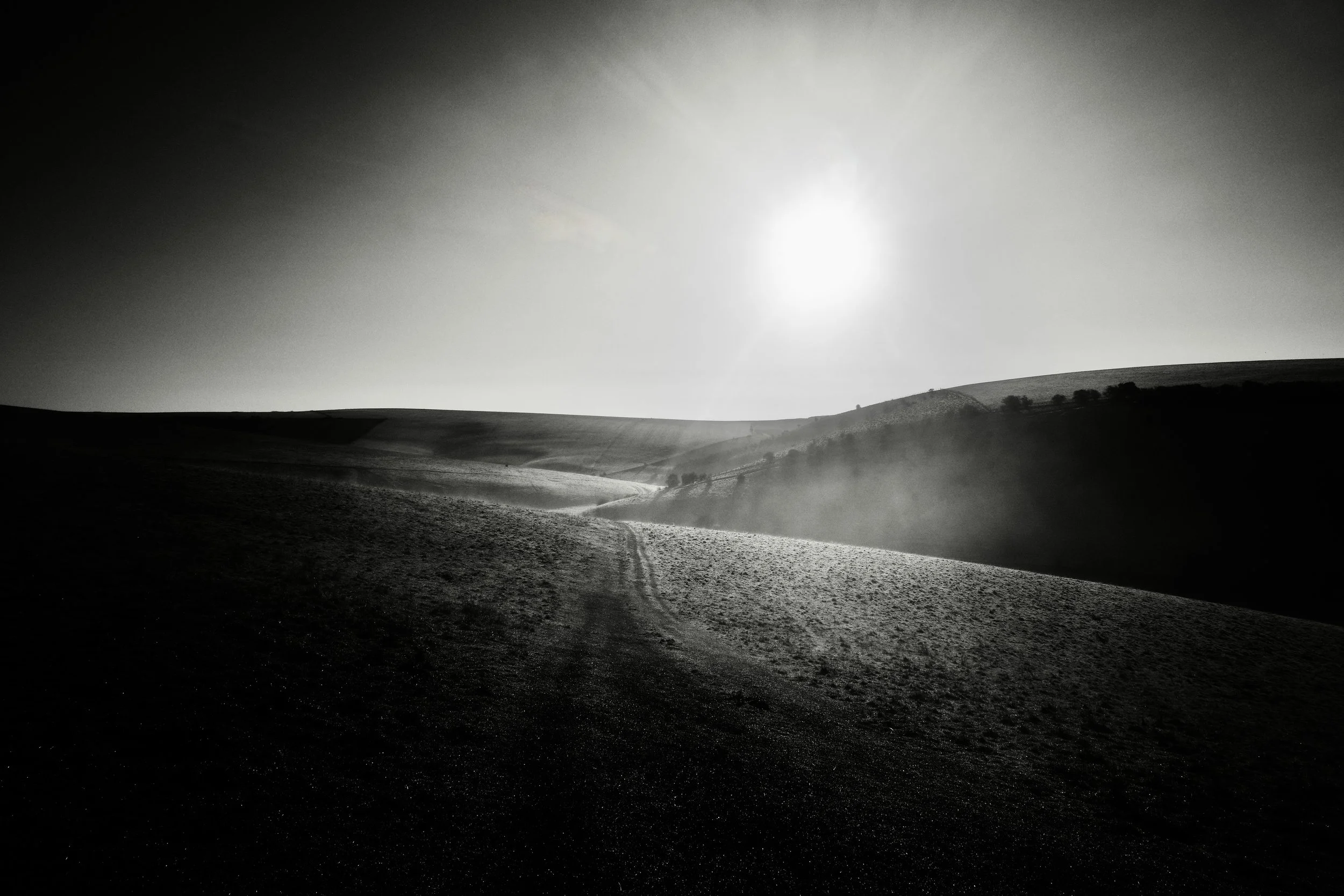
Through layering, erasure and reworking, I try to reveal the accumulated narrative within a place rather than describe it. I am always searching for a particular mark, or a sequence of marks, that carries a heightened emotional charge, one that might hold a sense of joy, presence or recognition.
Music runs beneath much of this work. I respond to the rhythms in the land: in repetition, in spacing, in the rise and fall of the ground. These rhythms shape the composition of each piece, as though the lines and marks are responding to a score already written into the landscape.
The intention is not to create a definitive image of a place, but to reveal something of its character, its memory, its movement and its underlying structure, and to leave space for the viewer to feel and interpret it in their own way.